





Author
Subscribe to our newsletter
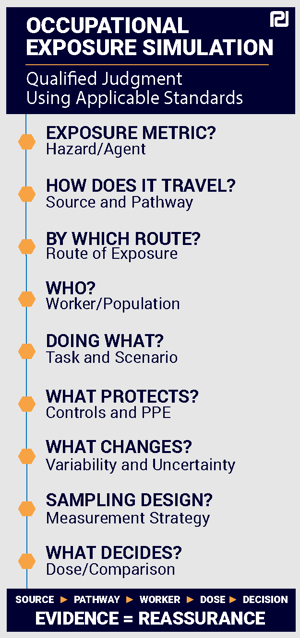
A simulation-based worker exposure study is a controlled investigation designed to identify and characterize potential exposures associated with materials, processes, and worker activities under defined conditions. Studies often involve monitoring airborne substances in enclosed chambers to confine test activities and regulate environmental conditions, including ventilation rates.
The information generated through these studies provides a scientific basis for product development, exposure assessment, risk evaluation, regulatory compliance, and product stewardship activities. Exposure studies can help address historical data gaps and provide range-finding estimates for evaluating existing or candidate products, materials, and work practices.
These studies frequently involve hazardous or potentially hazardous materials, necessitating safety protocols, engineering controls, personal protective equipment, and trained personnel.
Example Applications
|
|
Critical Aspects of Worker Exposure Simulations
Studies are designed and customized to address specific objectives. Depending on the purpose of the testing, study chambers can range in size from a miniature glove box up to a full-size exposure sciences laboratory with decontamination units. Larger test chambers are often necessary to replicate the intended work environment, with actual tools, equipment, and materials. Sampling is performed using direct-read instrumentation and/or integrated air samples that are analyzed using generally accepted industrial hygiene methods. Direct access to an analytical laboratory allows for timely, data-driven feedback to facilitate any iterative processes that are necessary to optimize the simulation or to pursue lines of investigation.
Few laboratories have the facilities and experience necessary to conduct high-quality worker exposure simulation studies. Based on RJ Lee Group's experience in this field, the following defining characteristics are important for study success.
-
-
Dedicated simulation chambers
-
Environmental control systems
-
Specialized industrial hygiene sampling equipment
-
Appropriate PPE and monitoring instrumentation
-
Experienced industrial hygienists and scientists
-
Careful study design and statistical planning
-
On-site accredited laboratory
-
Case Study: Respirable Crystalline Silica
In 2016, the Occupational Safety and Health Administration (OSHA) implemented a revised respirable crystalline silica standard that lowered the permissible exposure limit (PEL) to 50 µg/m³ as an 8-hour time-weighted average for construction, general industry, and maritime operations. Anticipating the new standard, the Gypsum Association engaged RJ Lee Group in 2015 to conduct controlled worker simulation studies evaluating respirable dust and crystalline silica exposures generated while cutting gypsum wallboard using various techniques.
Using a worker simulation chamber, researchers collected personal breathing zone and area air samples while replicating both typical and exaggerated construction activities. The study characterized worker exposures under controlled conditions and demonstrated that the materials and methods used to install drywall were unlikely to generate respirable crystalline silica exposures subject to the revised OSHA standard.
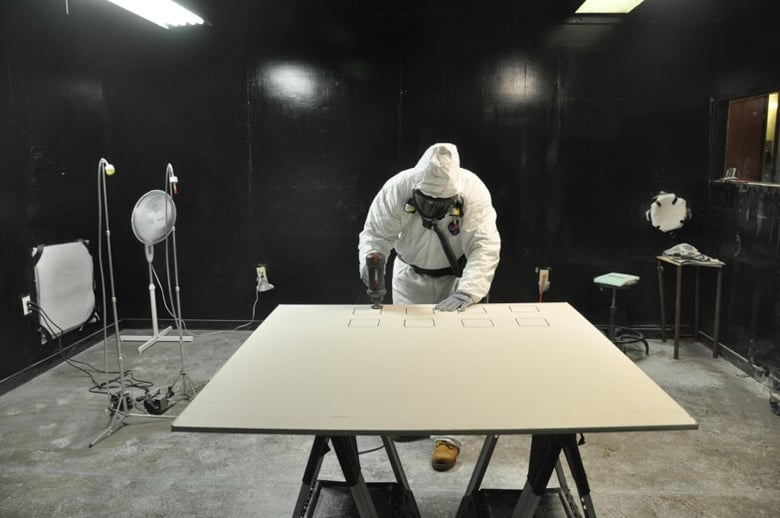
| Illustration of personal and area air sampling for airborne particulates while a worker is cutting construction materials within a test chamber. |
RJ Lee Group has expert scientists with the necessary experience, proper testing facilities, and accredited analytical laboratories to plan and perform a wide variety of simulation studies.
Related RJ Lee Group Capabilities
-
Certified Industrial Hygienist
-
HAZWOPER Trained Staff
-
Field Testing Equipment
-
Laboratory Test Procedures