HeaderSearch
Contact Us

Back

Capabilities

Respirable Crystalline Silica Testing

As a leading provider of X-ray Diffraction (XRD) analysis, RJ Lee Group specializes in the precise phase identification and quantification of quartz, cristobalite, and tridymite. We provide important data for  air quality monitoring, including special testing for respirable crystalline silica (RCS). Our laboratory supports compliance with OSHA, MSHA, and NIOSH regulations, utilizing state-of-the-art instrumentation to deliver low detection limits and rapid turnaround times.

Inhaled silica dust is a significant health hazard for those in mining, construction, and manufacturing; over time, accumulation can lead to silicosis, COPD, and other respiratory issues. Because silica becomes respirable during common industrial activities—such as grinding concrete, mixing cement, or drilling rock—regulatory bodies have established strict Permissible Exposure Limits (PEL). We partner with mine operators, construction firms, and EH&S consultants to monitor worker exposure, validate Safety Data Sheets (SDS), and support environmental remediation or litigation efforts through expert data interpretation and sampling guidance.

Contact a Silica Expert

Why do our customers choose us?

Clocks AdobeStock_439305875-05-1
Quick turnaround times
ComputerIcon
Low detection limits
RJLG_Icons_Lab
Identification of interferences
teamwork
Scientific consultation
Investigate Icon
Increased resolution
  • Lowest Detection Limits in the Industry—Our advanced techniques achieve detection limits as low as 0.1% or lower, even in complex mineral matrices which cause interferences in the XRD scans.

  • Matrix Reduction for Accuracy—Using specialized heat and acid digestion methods, we reduce the sample matrix prior to analysis to eliminate interferences and enhance sensitivity.

  • Expertise with Interfering Minerals—Our sample preparation methods are effective even when crystalline silica is present alongside minerals like mica, clay, feldspar, and barite which cause interferences in the XRD scans.

  • Specialized Identification—We also offer a unique XRD method to distinguish between opal and cristobalite, helping you solve complex silica-related challenges.

  • Fast turnaround times—We offer a standard 10-working-day turnaround time with quicker times available on request. Our lab has 4 Malvern Panalytical XRD instruments on-site, ensuring that instrument repairs will not slow down the receipt of your results.

Laboratory Testing

Crystalline Silica Analysis

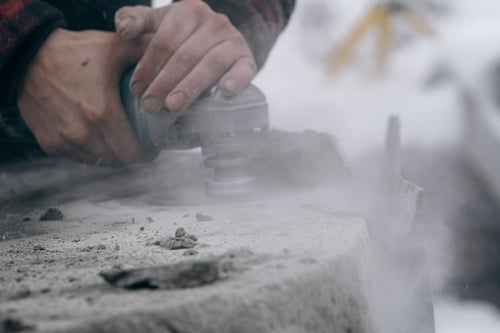
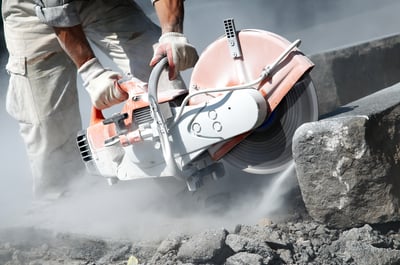
Crystalline silica is a naturally occurring mineral found in materials such as sand, soil, granite, and construction products like concrete, glass, ceramics, and engineered stone. When these materials are cut, ground, or drilled, they can release respirable crystalline silica dust—a known health hazard linked to silicosis and other lung diseases.

Why Perform Crystalline Silica Testing?

Testing your product or bulk material is essential to:

  • Protect worker health and safety

  • Comply with OSHA labeling and exposure regulations

  • Understand the silica content in your raw materials or finished product

Grinding stone

Sample Collection

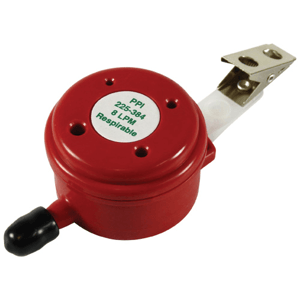
Sampling methods for respirable silica use either a cyclone with a reusable filter cartridge or a disposable parallel particle impactor (PPI). Regular gravimetric testing is used to monitor air quality and ensure compliance with specified permissible exposure limits. 

The geologists and EH&S professionals at RJ Lee Group provide operators with a full range of services to ensure worker safety and regulatory compliance. 

  • Testing of bulk and air samples

  • On-site and off-site testing

  • Developing in-house laboratory  capabilities

  • Setting up structured compliance timelines

  • Conducting routine audits tailored to align with MSHA and OSHA standards

PPI sampler

Instrumentation

X-Ray Diffraction (XRD)

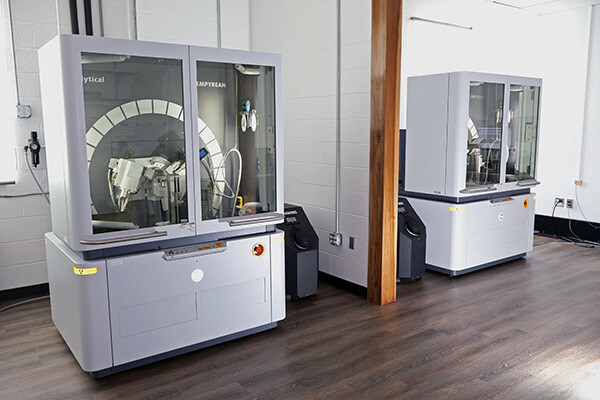
RJ Lee Group uses X-ray diffraction (XRD), a powerful, nondestructive technique for characterizing crystalline materials. RJ Lee Group uses the very latest XRD Panalytical Empyrean with BBHD optics and 1Der detector. This state-of-the-art technology gives better resolution and sensitivity, providing very low detection limits for short duration exposures. It also increases throughput and eliminates redundancy, allowing us to offer rapid turnaround times with high quality output.

We employ a clean plasma ashing method for air sample preparations, eliminating the filter without leaving ash or other residues that can contaminate samples.

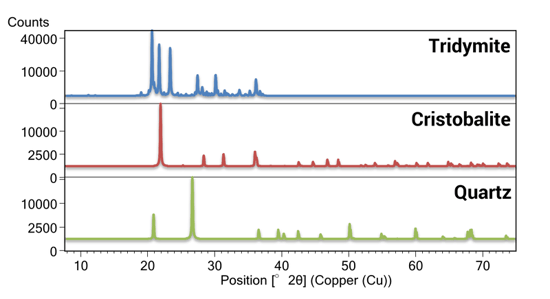
Our XRD lab for crystalline silica in Monroeville, PA, offers comprehensive quantitative silica analysis with unmatched sensitivity and accuracy. Our testing includes all three regulated forms of crystalline silica:

  • Quartz
  • Cristobalite
  • Tridymite
Crystalline Silica Analysis Page Graphic-1-1-1
XRD_Pair_web
Cutting saw producing dust

Application Spotlight

Identifying interferences

RJ Lee Group's state-of-the-art technology allows us to detect silica at very low levels and from short exposures. Our experts leverage this increased sensitivity, coupled with years of experience, to identify iterferences in collected samples. Other minerals, such as mica, clays, kaolin, feldspar, and graphite can greatly reduce the accuracy of test results if they are not properly classified. Identifying these interferences can also alert you to other issues you may not have been aware of.    

Discuss Respirable Silica Testing with an Expert

Schedule a discovery call with one of our scientists to learn more about how we partner with health and safety professionals to create a program that ensures compliance and keeps workers safe.